
Research theme

Disaster and the power to live
We are conducting various studies on human mind and behavior in disasters.
In particular, we clarified 8 factors (leadership, problem solving, altruism, stubbornness, etiquette, emotion regulation, self-transcendence, and active well-being) of the “power to live with disasters” in a survey of survivors of the Great East Japan Earthquake (2011), and using this questionnaire we are conducting various surveys, behavioral experiments, and clarification of their psychological and brain bases. We aim to apply the results of our research to disaster management and general education.
Eight Personal Characteristics Associated with the Power to Live with Disasters as Indicated by Survivors of the 2011 Great East Japan Earthquake Disaster (Sugiura et al., PLoS ONE, 2015)
A Concise Psychometric Tool to Measure Personal Characteristics for Surviving Natural Disasters: Development of a 16-Item Power to Live Questionnaire (Ishibashi et al., Geosciences, 2019)
Surveys and behavioral experiments
Psychological Processes and Personality Factors for an Appropriate Tsunami Evacuation (Sugiura et al., Geosciences, 2019)
Survival-oriented personality factors are associated with various types of social support in an emergency disaster situation (Sugiura et al., PLoS ONE, 2020)
Two Major Elements of Life Recovery After a Disaster: Their Impacts Dependent on Housing Damage and the Contributions of Psycho-Behavioral Factors (Sato et al., J Disaster Res, 2021)
Self-help and mutual assistance in the aftermath of a tsunami: How individual factors contribute to resolving difficulties (Sugiura et al., PLoS ONE, 2021)
Intentional binding and self-transcendence: Searching for pro-survival behavior in sense-of-agency (Niikuni et al., Conscious Cogn, 2022)
Adaptability, supernaturalness, and the neurocognitive basis of the self-transcendence trait: Toward an integrated framework through disaster psychology and a self-agency model (Sugiura, Front Behav Neurosci, 2022)
Does the eight-factor “power to live” in disaster exist since childhood? (Matsuzaki et al., Front Public Health, 2022)
Personality Traits and Types of Housing Recovery after the 2011 Great East Japan Earthquake and Tsunami (Honda et al., Sustainability, 2023)
Motivational decline and proactive response under thermal environmental stress are related to emotion- and problem-focused coping, respectively: Questionnaire construction and fMRI study (Kawata et al., Front Behav Neurosci, 2023)
Coping behavior under COVID-19 pandemic (Ding et al., Front Psychiatry, 2023)
Adoptation to digitization society (Hamamoto et al., Front Psychol, 2023)
Tsunami evacuation online experiment (Takubo et al., J Disaster Res, 2024)
Better-Than-Average effect (Ding et al., Fron Psychol, 2024)
Brain studies
Taking another’s perspective promotes right parieto-frontal activity that reflects open-minded thought (Miura et al., Social Neuroscience, 2020)
Automatic adaptive emotion regulation is associated with lower emotion-related activation in the frontoparietal cortex and other cortical regions with multi-componential organization (Sugiura et al., Front Behav Neurosci, 2023)
Why people hesitate to help: Neural correlates of the counter-dynamics of altruistic helping and individual differences in daily helping tendencies (Wijaya et al., Front Psychol, 2023)
Social-coalitional trait is related to coping capacity with mortality threat: association with leadership and a reduced parietal response to mortality salience (Hirano et al., Front Psychol, 2023)
- The Self in the Brain
- Where value comes from?
- Language and communication
- Disaster and the power to live
- Human brain science for the future
Related News
202512.12
Coping Strategies after the 2025 Myanmar Earthquake
On March 28, 2025, a powerful M7.7 earthquake struck central Myanmar, resulting in widespread loss o

202511.05
How Does the Infection Threat Change Our Social Orientation? (Publication)
Does the fear of infection fundamentally alter how people relate to others and to society? Di

202510.10
Effects of Pain Catastrophizing on Pain-Related Resting-State Functional Connectivity(Poster Presentation at International Conference)
People experience pain in different ways. These differences are influenced not only by physical fact
202509.07
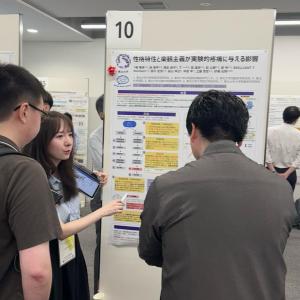
The Influence of Personality Traits and Optimism on Experimental Pain: fMRI Study(Poster Presentation)
Personality traits are known to influence pain perception. Some studies suggest that individuals wi
202509.07
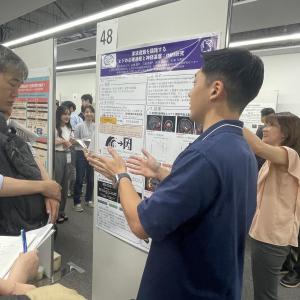
The Psychological Processes and Neural Basis of Hesitation in Tsunami Evacuation: An fMRI Study (Poster Presentation)
Previous research had revealed that emotion regulation characteristics contribute to immediate tsuna
202509.04
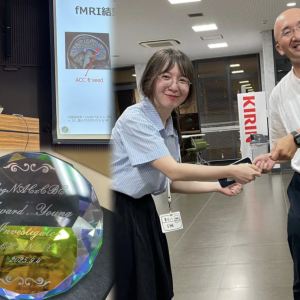
Exploring with fMRI: How Personality Traits and Optimism Alter Pain Responses (Oral Presentation · Awarded)
To better capture individual differences in pain sensitivity, we combined psychological assessments
202505.26
Individual differences in brain activity during watching disaster prevention videos: Disaster awareness and educational effects (Conference oral presentation)
Video is an important tool for disaster education. How are individual differences in disaster awaren
202503.31
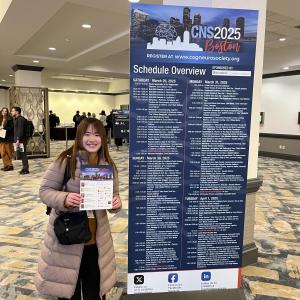
Exploring the neural mechanisms of preference for sad music (Poster presentation)
We generally want to avoid experiencing negative emotions such as sadness. Interestingly, some
202503.07
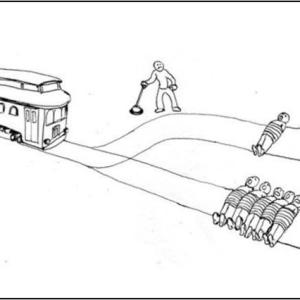
Investigating the Neural Mechanism of Victim Approval in Moral Decision-making (Poster Presentation)
Value differences between options are not the only reason for making moral-decisions. With fMRI data
202503.07
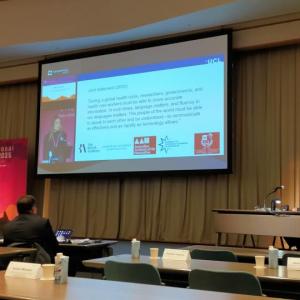
Brain Science Approaches to Foreign Language Communication in Emergencies (International Forum Lecture)
In a globalized world, there are more and more opportunities to communicate and make decisions in fo